
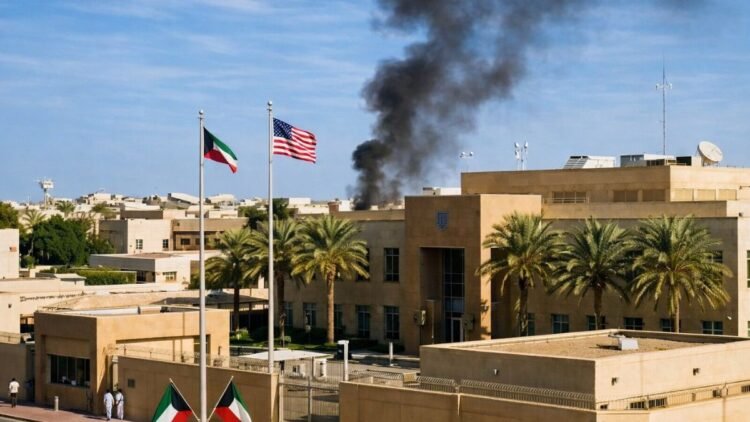
Tensions in the Gulf region have escalated sharply, with black smoke rising from the U.S. Embassy in Kuwait City following a series of Iranian missile and drone strikes.
These attacks, part of a broader retaliation from Iran, come after the killing of the country’s supreme leader by U.S.-Israeli operations. Sirens were heard in Kuwait City, and while the embassy itself did not confirm any direct hits, it issued a security alert urging individuals to stay away due to the ongoing threat.
The Iranian Strikes: A Retaliation
The missile and drone attacks began over the weekend, marking an alarming increase in the region’s volatility. The strikes were Iran’s response to the recent U.S.-Israeli assault that resulted in the death of its supreme leader, which has further inflamed tensions in the Middle East.
These military actions are a significant part of a larger conflict, with Iran seeking to retaliate against what it views as foreign aggression.
Kuwait, an oil-rich country, has become one of the primary sites of these escalating tensions. The attacks have left a devastating mark, as one person was killed, and 32 others were injured as of Sunday. These casualties underscore the threat posed to both local and international populations in the region.
Smoke Over US Embassy in Kuwait
On Monday, AFP correspondents reported black smoke rising from the U.S. Embassy in Kuwait City. While the embassy itself did not officially confirm a direct hit, the sight of smoke over the compound raised significant concerns about the potential for further violence.
Sirens blared across the city as part of ongoing warnings of potential missile and UAV (unmanned aerial vehicle) attacks.
The U.S. Embassy acted quickly, issuing a security alert that warned people to avoid the area. The embassy specifically stated, “There is a continuing threat of missile and UAV attacks over Kuwait. Do not come to the embassy,” underscoring the high risk that both locals and foreign nationals face in the current situation.
Kuwait’s Response to the Threat
Kuwait’s Interior Ministry took immediate action, intercepting an unspecified number of drones that targeted the small nation at dawn. These intercepted attacks were part of a broader Iranian strategy that has involved UAVs and missiles aimed at both military and civilian infrastructure.
In addition to these interceptions, Kuwait’s authorities have reinforced their security measures, calling for heightened vigilance among the population and reinforcing border controls.
Despite these efforts, the violence has already claimed lives and left many injured, showing the difficulty of defending against sophisticated missile and drone threats.
The Toll of Conflict
As the situation unfolds, the impact of the violence extends beyond physical destruction. The social fabric of Kuwait has been shaken, and the international community is closely monitoring the developments. One person’s death and the 32 injuries serve as a stark reminder of the human cost of these escalating tensions.
The recent events have led to a critical reassessment of security measures not only in Kuwait but across the entire Gulf region, where geopolitical instability continues to pose significant threats to civilians.
The Impact on Global Oil Markets
Given Kuwait’s position as a major oil exporter, the violence and instability in the region have raised concerns about the future of global oil markets. The Gulf is one of the most vital regions for the world’s oil supply, and any disruptions can lead to fluctuations in oil prices.
The ongoing tensions between Iran and the United States, coupled with the volatility in the region, have already begun to affect global markets. Traders and policymakers are on high alert as they watch the developments closely, with many fearing that a prolonged conflict could further destabilize the region.
Key Facts About the Current Situation
| Date | Event | Casualties | Response | Affected Area |
|---|---|---|---|---|
| Saturday | Iranian missile and drone strikes begin | 1 killed, 32 injured | Security alerts issued by U.S. Embassy | Kuwait, Gulf region |
| Monday | Smoke rises from U.S. Embassy in Kuwait | No direct hits confirmed | Security alert: Stay away from Embassy | Kuwait City |
| Ongoing | Interception of drones by Kuwaiti authorities | 0 casualties from interception | Heightened security measures | Kuwait |
As the Iranian strikes intensify, the situation in Kuwait continues to evolve, with the U.S. Embassy remaining on high alert. While the direct impact on the embassy remains unclear, the ongoing missile and UAV threats make it a perilous time for both locals and expatriates in the region.
The international community watches closely, with many fearing that these attacks could be a prelude to more significant geopolitical turmoil.
FAQs
Has the U.S. Embassy in Kuwait been hit by Iranian missiles?
While black smoke was seen rising from the embassy, there has been no official confirmation of a direct missile hit. The embassy issued security alerts urging people to avoid the area due to the ongoing threats.
How many casualties have been reported in Kuwait?
As of Sunday, one person has been killed, and 32 others were injured due to the Iranian retaliatory attacks in Kuwait.
What is the current security situation in Kuwait?
Kuwait has increased its security measures, with the Interior Ministry successfully intercepting multiple drones targeting the country. Authorities have issued warnings for increased vigilance and have implemented additional border controls.