
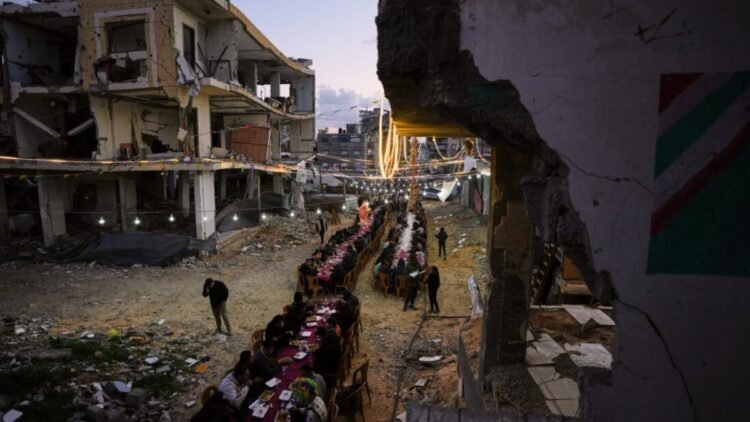
The Gaza ceasefire has shown cautious progress in recent weeks, offering limited relief to more than 2 million residents living in the battered enclave. Diplomatic momentum increased after high-level political efforts pushed reconstruction pledges worth billions of dollars and renewed negotiations aimed at stabilizing the region.
However, the widening conflict sparked by U.S. and Israeli strikes on Iran now threatens to overshadow the fragile situation in Gaza. Many Palestinians fear that as global attention shifts toward escalating tensions with Iran, Gaza’s humanitarian crisis and ceasefire negotiations may lose urgency on the international stage.
Border Closures Trigger Fresh Anxiety
Following the latest regional escalation, all crossings into Gaza were closed, halting the entry of goods and disrupting humanitarian operations. The Israeli military body overseeing civilian affairs in Gaza stated that food supplies inside the territory are expected to suffice for an extended period and confirmed that the rotation of humanitarian workers has been postponed.
Despite these assurances, residents rushed to markets, recalling last year’s severe shortages under prolonged blockade conditions. Reports indicate sharp price increases, particularly for staples such as flour, cooking oil, and dairy products. Panic buying has intensified as uncertainty grows over when crossings might reopen.
The situation remains precarious because Gaza depends heavily on imported goods for food, medicine, fuel, and essential supplies. Any prolonged closure can quickly lead to scarcity and price inflation.
Food Security: Slight Improvement, Still Critical
Recent food security assessments show some improvement under the ceasefire framework. In February 2026, households reported an average of two meals per day, compared to just one meal per day during the height of previous shortages.
However, conditions remain alarming:
- One in five households still consumes only one meal daily
- Basic medical supplies and fuel remain insufficient
- Displacement continues to strain shelter and sanitation systems
Humanitarian organizations warn that daily food deliveries are essential. One major aid group currently provides approximately 1 million meals per day in Gaza but has cautioned that it could run out of supplies if crossings remain closed for an extended period.
Ramadan Disrupted by Renewed Tensions
The renewed closures come during Ramadan, a holy month traditionally marked by fasting, communal meals, and prayer. In Gaza, Ramadan has been overshadowed by uncertainty and disrupted supply chains.
The Rafah crossing, Gaza’s only gateway not directly controlled by Israel, had recently reopened for limited passenger movement. However, no cargo was permitted, meaning goods still depended on Israeli-controlled crossings. With all entry points now shut again, Ramadan meals are increasingly uncertain for many families.
Residents describe scenes of long lines at markets and rapid price hikes, particularly for milk, flour, and baby supplies. The psychological impact is significant, especially for families already displaced multiple times.
Ceasefire Challenges Remain
Under the October 10 U.S.-brokered ceasefire, large-scale fighting subsided, although sporadic violence continues. Major obstacles to a durable peace remain:
- The disarmament of Hamas
- Establishment of an international stabilization force
- Formation and deployment of a new Palestinian governing committee
- Long-term reconstruction funding and implementation
While diplomatic efforts continue, regional instability complicates progress. If the Iran conflict escalates further, diplomatic bandwidth may shift away from Gaza.
| Category | Current Situation | Key Figures |
|---|---|---|
| Population | Residents in Gaza | Over 2 million |
| Food Access | Average meals per day (Feb 2026) | 2 meals |
| Severe Food Insecurity | Households with one meal daily | 20% |
| Aid Operations | Meals provided daily by major NGO | 1 million |
| Casual Impact | Ongoing displacement & shortages | Widespread |
A Shifting Global Focus
International leaders had recently gathered to push forward ceasefire efforts and reconstruction plans. Billions in pledges aimed to rebuild infrastructure destroyed during months of conflict. Yet geopolitical developments involving Iran now risk redirecting diplomatic and media attention.
Some residents note that military activity near certain areas has slightly decreased, potentially because Israeli forces are concentrating on broader regional threats. However, reduced bombardment does not eliminate shortages, trauma, or economic devastation.
The central concern remains clear: without consistent international engagement and open crossings, the fragile progress in Gaza could stall or reverse.
FAQs
Is the Gaza ceasefire currently holding?
Large-scale fighting has subsided under the October ceasefire framework, but sporadic violence continues and the situation remains unstable.
Why are Palestinians concerned about a new war shifting focus?
Escalating regional tensions could divert diplomatic pressure and humanitarian attention away from Gaza, delaying reconstruction and aid efforts.
How severe is the food situation in Gaza?
Conditions have improved slightly to two meals per day on average, but 20% of households still survive on just one meal daily, and supplies remain fragile.